Cubic Zirconia vs. Diamond for Your Style
A ring that reminds you of a great moment. Stud earrings that bring light to your face even on an ordinary Tuesday. Behind the search for cubic zirconia versus diamond, there's rarely just a material question. It's about which stone suits your style, your everyday life, and the meaning of your piece of jewelry.
Both sparkle. Both can give a design a precious, feminine aura. But cubic zirconia and diamond tell different stories - in their origin, in their light, in their durability, and also in their price. Knowing the differences means you don't just choose the seemingly better stone, but the one that feels right.
Cubic Zirconia vs. Diamond: The Key Differences
A diamond is a natural gemstone made of crystallized carbon. It forms over a very long time deep within the Earth. In addition, there are lab-grown diamonds: they are created in a laboratory but have the same chemical composition and hardness as natural diamonds. The difference therefore lies primarily in origin and price, not in the fundamental material properties.
Cubic zirconia, more precisely cubic zirconium oxide, on the other hand, is an artificially produced gemstone. It is cut in such a way that it visually comes very close to a diamond. Especially in delicate rings, necklaces, or sparkling stud earrings, high-quality cubic zirconia appears exceptionally brilliant at first glance.
The crucial difference: A diamond is a natural or lab-grown carbon mineral. Cubic zirconia is a precisely crafted stone created for affordable, clear brilliance. This doesn't make it any less beautiful - just different.
The Sparkle: Clear Fire or Rainbow Reflections?
Diamonds reflect light with an unmistakable mixture of white brilliance, darker contrasts, and subtle flashes of color. This depth is often perceived as lively. Every cut, every setting, and every movement changes how the stone appears.
Cubic zirconia can also shine intensely. Often, it even shows clearer rainbow reflections than a diamond. This looks glamorous, fresh, and very expressive - especially in jewelry that is deliberately meant to stand out. With larger stones, however, this strong play of colors can reveal that it is not a diamond.
Which look is more beautiful is not a question of right or wrong. Those who love a subtle, naturally complex brilliance are often drawn to diamonds. Those who seek luminous sparkle and a clear, modern brilliance will find a beautiful companion in cubic zirconia.
Hardness and Suitability for Everyday Wear
With a Mohs hardness of 10, the diamond is the hardest natural material. It is therefore particularly resistant to scratches and ideal for jewelry worn daily - such as an engagement ring or a ring with very personal meaning.
Cubic zirconia ranks around 8 to 8.5 on the Mohs scale. This is perfectly suitable for everyday jewelry, but the surface can show fine signs of wear over years. The stone can also lose some of its crystal-clear effect over time if residues from cosmetics, water, or skin care products accumulate on it.
This doesn't mean that cubic zirconia needs to be handled like a precious secret. It goes wonderfully with jewelry that you wear frequently. Only for a ring that truly accompanies you through work, sports, household chores, and travel every day is a diamond the more durable choice in the long run.
Price: Room for Meaning Instead of Just Material
Here, the difference becomes particularly noticeable. A diamond is significantly more expensive than cubic zirconia. Its value results from factors such as carat weight, cut, color, clarity, origin, and, for natural stones, its rarity. A certificate can provide additional security for higher-quality diamonds.
Cubic zirconia, on the other hand, allows for looks with generous sparkle at an accessible price. This creates freedom: you can choose a piece of jewelry based on your feelings, instead of being guided solely by the size of a budget. Perhaps it becomes a delicate necklace for your best friend, a pair of elegant hoop earrings for a new beginning, or a ring you give yourself for a milestone.
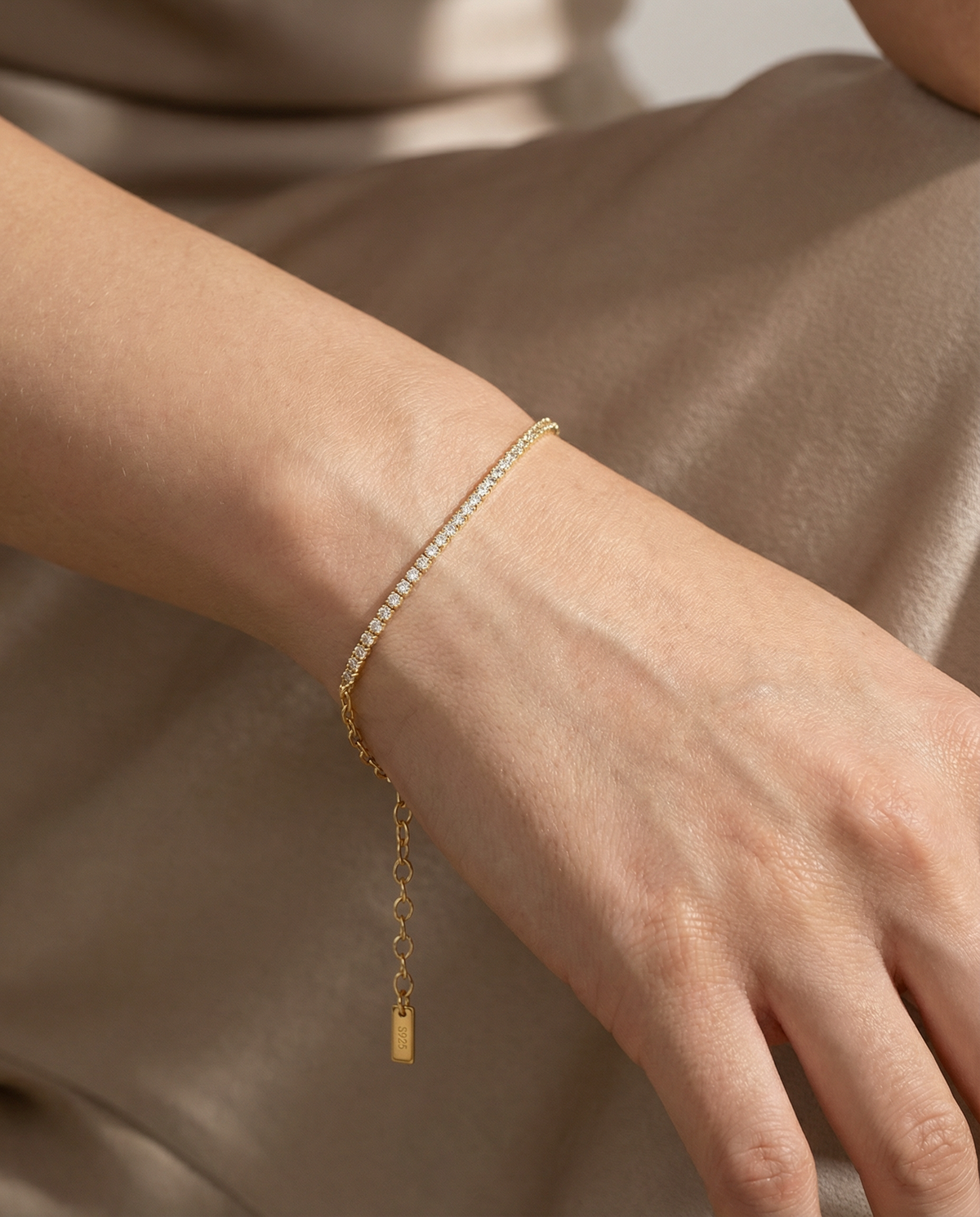
Especially for jewelry made of 925 sterling silver or gold-plated silver, cubic zirconia is a harmonious choice. The combination of valuable metal and brilliant stone looks elegant but remains attainable. A design doesn't have to consist of a rare gemstone to remind you every morning of who you are and what you have achieved.
Is a Diamond Automatically an Investment?
A diamond can be valuable emotionally and materially, but jewelry should not be hastily regarded as a safe financial investment. When reselling, brand, certification, quality, demand, and the condition of the piece of jewelry play a significant role. The original purchase price is not automatically recouped.
If you decide on a diamond, the decision should therefore primarily be personal: because of its exceptional resistance, its natural origin, or because it is meant to permanently mark a special occasion. For pure everyday sparkle, cubic zirconia often offers the more convincing price-performance ratio.
Symbolism: Which Stone Suits Which Occasion?
A diamond is traditionally associated with constancy, love, and great promises. That's why it is a natural choice for engagements, weddings, or an heirloom. Its history extends far beyond a single moment - and that's precisely what can make its emotional power.
Cubic zirconia stands for a different, equally beautiful idea: radiance should not be reserved only for rare moments. It suits small and large occasions, gifts between friends, birthdays, baptisms, or a piece of jewelry that you choose without any special occasion because you recognize yourself in it.
For a gift, the meaning is greater than the stone alone anyway. An engraving, a symbol, a birthstone, or a pendant with an initial can turn a delicate piece of jewelry into a very personal companion. What happens when the recipient opens the box cannot be measured in carats.
How to Keep Cubic Zirconia Sparkling for a Long Time
Cubic zirconia deserves a little attention so that its light is not obscured by everyday traces. Remove jewelry before showering, sports, swimming, and sleeping. Perfume, hairspray, and cream should be applied to the skin first, then the jewelry.
For cleaning, a soft, dry or slightly damp cloth is usually sufficient. For more stubborn residues, lukewarm water with a small amount of mild soap can help. The jewelry should then be carefully dried. Aggressive cleaning agents, hard brushes, and ultrasonic devices are not a good idea, especially for gold-plated jewelry.
Store your favorite pieces separately in a soft jewelry case. This protects them from scratches, and you preserve not only their shine but also the small stories attached to them.
The Most Beautiful Choice is the One You Love to Wear
If you are looking for a piece of jewelry for decades that can withstand extreme everyday life and is meant to mark an extraordinary occasion, a diamond can be exactly right. If you are looking for luminous elegance, versatile designs, and a valuable gift with an accessible price, cubic zirconia is a conscious, stylish decision.
Don't be guided by the question of which stone is objectively worth more. Choose the one that suits your life: your favorite ring that you never want to take off, your big "yes," or the moment you tell yourself you deserve something beautiful.