Article: Guide to Jewelry Materials with Character
Guide to Jewelry Materials with Character
A ring you wear every day. A necklace that reminds you of a loved one. Or a gift that accompanies a new beginning: jewelry only truly becomes personal when its material matches its sentiment. This guide to jewelry materials will help you make a conscious choice—according to your style, your everyday life, and the story you want to wear or give.
Jewelry Materials: What Makes a Piece Special?
The beauty of a piece of jewelry begins with its design, but the material also determines how it feels on the skin, how it ages, and what place it occupies in your life. Some women love the clear, cool shimmer of silver. Others repeatedly reach for warm gold tones because they make their skin glow. And sometimes, a piece of jewelry is primarily meant to be one thing: a lasting symbol of a significant moment.
There is no single material that is the right choice for all situations. A delicate gold-plated necklace can be exactly right for a lovingly chosen birthday gift. A solid gold ring, on the other hand, can become a quiet companion for many years. The crucial thing is that material, occasion, and wearing comfort come together.
925 Sterling Silver: Clear, Timeless, and Close to Everyday Life
925 Sterling silver is one of the most popular precious metals for high-quality jewelry. The number 925 means that the material consists of 92.5 percent pure silver. The remaining percentage of other metals gives it the strength that jewelry needs for everyday wear. Pure silver would be too soft for delicate necklaces, rings, or earrings.
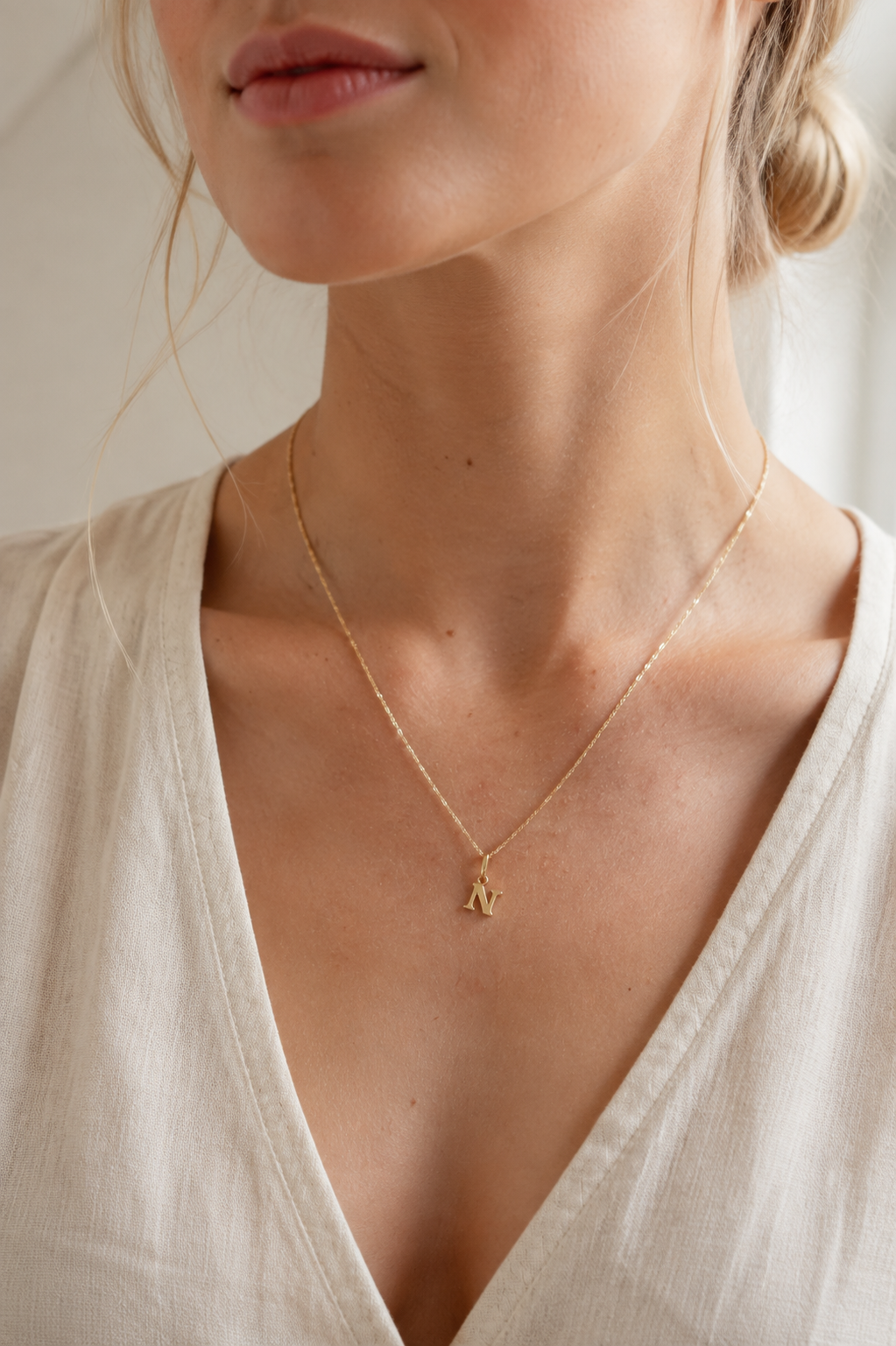
Silver has a restrained, bright allure. It looks modern and yet familiar—especially beautiful for jewelry that can be effortlessly combined with other favorite pieces. A silver necklace with an initial, a delicate ring, or small hoops can appear very personal without being loud.
Over time, sterling silver can oxidize and become a bit darker. This is not a defect, but a natural reaction to air, humidity, or care products. The original shine can usually be easily restored with a soft polishing cloth. Those who wear their jewelry regularly and store it dry often enjoy it for a particularly long time.
Guide to Jewelry Materials: Gold-plated or Gilded?
Gold-colored jewelry brings warmth, radiance, and a special softness to any styling. With gold-plated silver jewelry, a fine layer of gold covers a core of 925 sterling silver. This creates the luxurious look of gold at a more accessible price—ideal for pieces that you like to change, give as gifts, or choose as an expression of your mood.
The terms gold plating and gilding are often used interchangeably. What's important is to pay attention to the base: Gold-plated 925 sterling silver combines the value and pleasant feel of real silver with the sunny tone of a gold surface. It is a beautiful choice for necklaces, pendants, earrings, and bracelets that are meant to look feminine yet remain suitable for everyday wear.
How long the gilding remains beautiful also depends on how and how often you wear your jewelry. Friction, perfume, sunscreen, sweat, and water can alter the surface over time. Rings, in particular, are subject to more wear and tear in everyday life than earrings or necklaces. This doesn't mean you have to spare them until they disappear into a jewelry box. It just means treating them with the same attention you would give to a special piece.
It's best to put on gold-plated jewelry only after applying lotion and perfume. Take it off when exercising, showering, sleeping, and swimming. Store each piece separately and dry, so it doesn't rub against other jewelry. A soft, dry cloth is usually sufficient for gentle care.
Solid Gold 585 and 333: For Memories That Last
Solid gold is a decision for durability. Unlike gold-plated jewelry, the material is not just gold on the surface; the gold alloy runs through the entire piece. This means its color remains, even if a ring or pendant is worn for years.
For 585 gold, the gold content is 58.5 percent. This alloy combines a high gold content with good durability and an intense, noble color. Jewelry made of 585 gold is wonderfully suited for pieces with special emotional weight: an engagement ring, a personalized piece of jewelry for a birth, or a pendant that carries a connection across generations.
333 gold contains 33.3 percent fine gold and is a more accessible solid gold option. It is stable and offers the lasting quality of gold at a lower entry price. Which alloy is better is not a question of right or wrong. Those seeking a stronger gold value and a long-term investment are often drawn to 585 gold. Those who want to choose a genuine gold piece for everyday wear or a first meaningful occasion will find a beautiful option in 333 gold.
Even solid gold appreciates care. Dust and residues can be removed with a soft cloth. For heavier soiling, lukewarm water with a little mild soap helps, as long as delicate stones or pearls are not affected. Afterwards, the piece of jewelry should be carefully dried.
Pearls and Zirconia: The Details That Tell a Story
Material doesn't just mean metal. A freshwater pearl lends a piece of jewelry a soft, organic elegance, as no two pearls are exactly alike. Their small irregularity is part of their magic. Pearls are suitable for grand occasions like weddings, baptisms, or births, but also for a simple shirt and your favorite blazer.
Because pearls are naturally more delicate than metal, they should not come into contact with perfume, hairspray, or cleaning products. A soft cloth after wearing preserves their silky luster. Store pearl jewelry separately from harder jewelry to protect its surface.
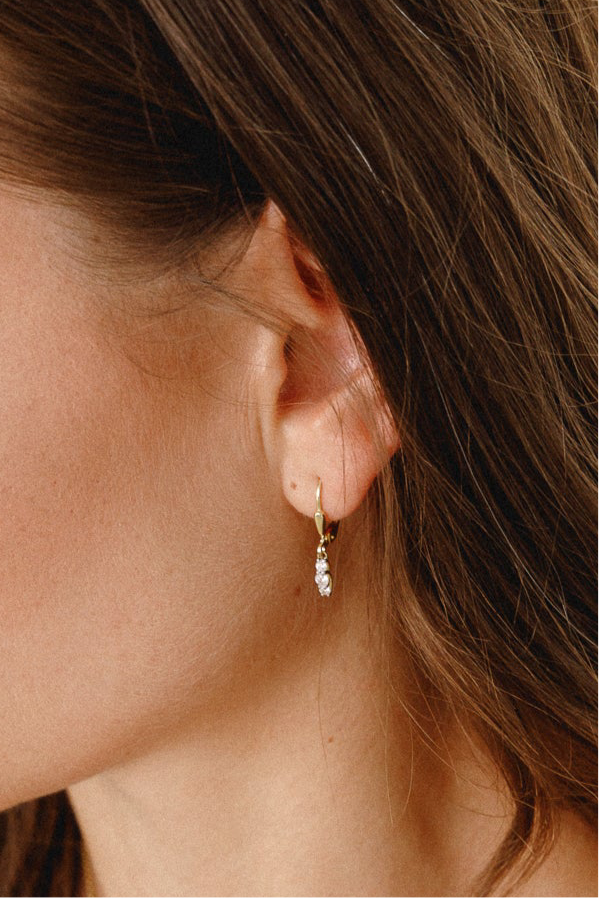
Zirconia adds sparkling accents. The precisely cut stone catches light and gives designs a brilliant radiance—from subtle stud earrings to rings that intentionally make a statement. Zirconia is a wonderful choice if you love the sparkle of a stone and are looking for a piece of jewelry that can be easily worn for many occasions.
How to Find the Material That Suits You
Don't start by asking which material is objectively best. Instead, ask yourself when and why you want to wear this piece of jewelry. For daily layering that should feel flexible, 925 sterling silver and gold-plated silver are wonderful companions. For a milestone or a symbol that should accompany you for many years, solid gold might be the more fitting choice.
Your skin's undertone can also offer guidance, but it doesn't have to be a rule. Silver often looks particularly harmonious with cool tones, while gold emphasizes warm tones. But personal style is stronger than any color theory. If gold makes you feel braver, softer, or more like yourself, that's reason enough.
When giving gifts, pay attention to the small clues: Does the person tend to wear silver or gold-colored earrings? Do they prefer minimalist shapes or sparkling details? Would an initial, a zodiac sign, or a symbol bring the memory even closer to their heart? Material and meaning complement each other beautifully here.
A piece of jewelry doesn't have to remain untouched to be precious. It is meant to accompany you through everyday life, celebrations, new beginnings, and quiet moments. Choose the material that suits your life—and the meaning that only you can give it.