How to style layered necklaces for your look
A single necklace can be beautiful. Multiple necklaces can tell the story of who you are. Styling layered necklaces correctly does not mean wearing as much jewelry as possible at once. It is about combining your favorite pieces so that memories, symbols, and fine details create a look that feels uniquely you.
Perhaps a necklace bears an initial that reminds you of a loved one. Maybe a zodiac sign accompanies you as a small token of your personality. Or perhaps a shimmering pearl adds that quiet, feminine touch you are looking for in your everyday look. When layering, these meanings are allowed to coexist—lightly, harmoniously, and with enough space for each individual piece to shine.
What makes for beautiful necklace layering
Successful layering thrives on contrasts, not coincidence. Different necklace lengths create depth, varying textures add movement, and a consciously chosen pendant provides an emotional focal point. This prevents your décolletage from looking overloaded and makes it appear lovingly curated instead.
The most important rule is also the simplest: every necklace needs its own space. If multiple pendants sit at the same height or fine links constantly get tangled, the look loses its lightness. Therefore, choose pieces that complement each other rather than competing for attention.
You don't have to start from scratch every time. A delicate short chain that you wear daily can be your base. Add to it, depending on your mood, a personal necklace, a longer coin necklace, or a special pendant. This creates a style that remains versatile yet feels familiar.
Styling layered necklaces correctly with the right lengths
Length determines whether multiple necklaces look clear and elegant. As a guide, an interval of about three to five centimeters between the individual necklaces is helpful. It doesn't have to be millimeter-precise; what matters is that the layers are visibly separated from one another.
A short necklace usually sits close to the neck, forming a fine frame for the face and collarbone. It looks particularly beautiful with open shirts, V-necks, or a simple round-neck tee. Above or below it, you can add a medium-length necklace, perhaps featuring a small symbol, a pearl, or a subtle zirconia detail.
The longest necklace can gently lead the gaze downward. It pairs wonderfully with deep necklines, blouses, and dresses, but can also be worn over simple knitwear. Especially in autumn and winter, a longer necklace makes an understated look instantly more personal.
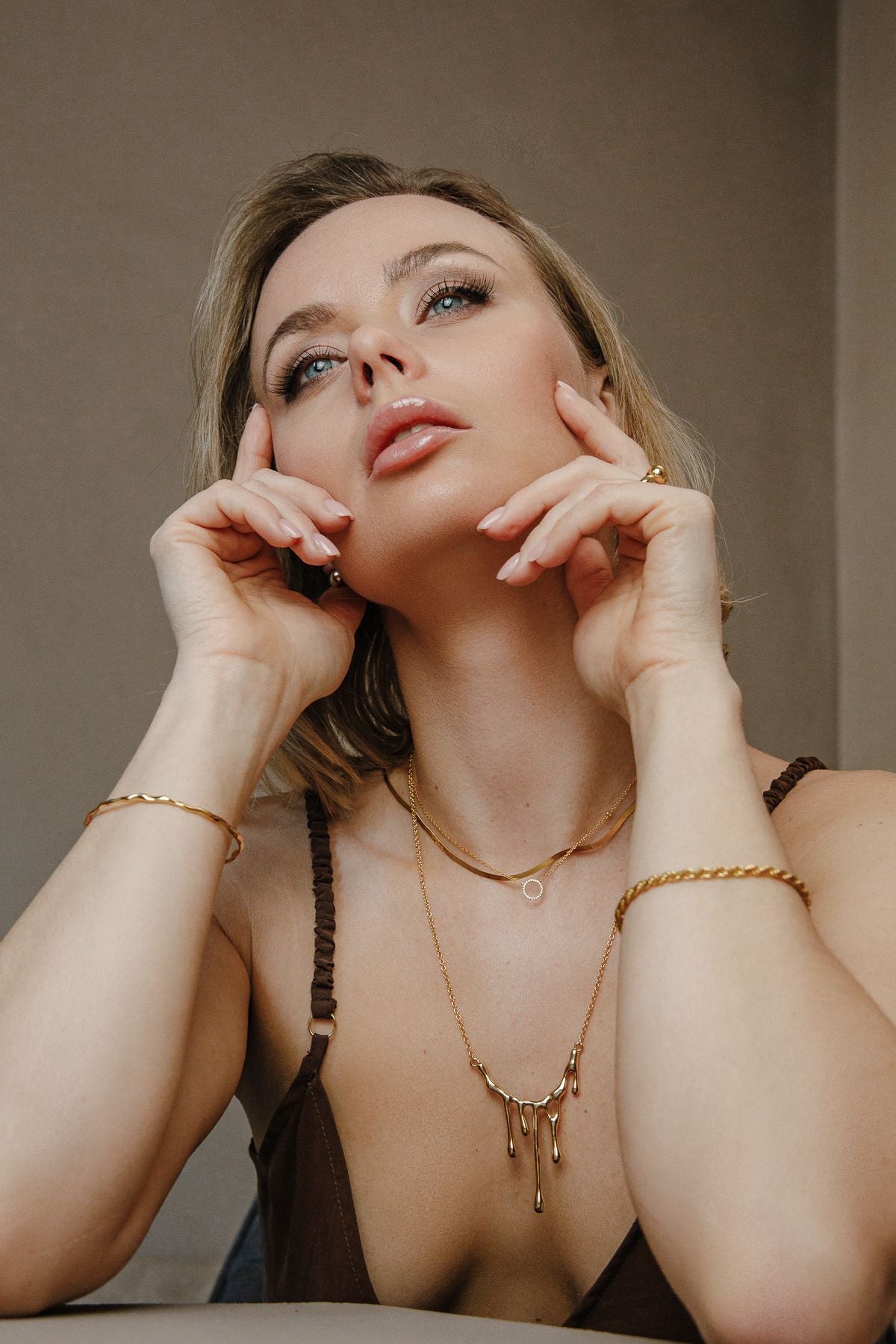
A harmonious combination can consist of three layers, for example: a fine short chain without a pendant, a medium-length chain with an initial, and a longer chain with an organically shaped pendant. For a calmer look, two lengths are more than enough. Less can be particularly elegant when the material and meaning speak for themselves.
Consider the neckline
Not every necklace suits every top—and that is exactly the opportunity to consciously match your jewelry to your look. With a V-neck, necklaces that pick up the line of the neckline and lengthen downward look beautiful. With a high collar, a short necklace or a slightly longer one worn over the fabric can become a real eye-catcher.
With an open shirt, the layering can be a bit more casual. Here, two to three fine necklaces look particularly feminine when they continue gently below the collarbone. For a very striking dress with ruffles, lace, or a strong pattern, however, a personal necklace plus one quiet companion is often enough. Jewelry should underscore your look, not compete with it.
Pendants as the heart of your combination
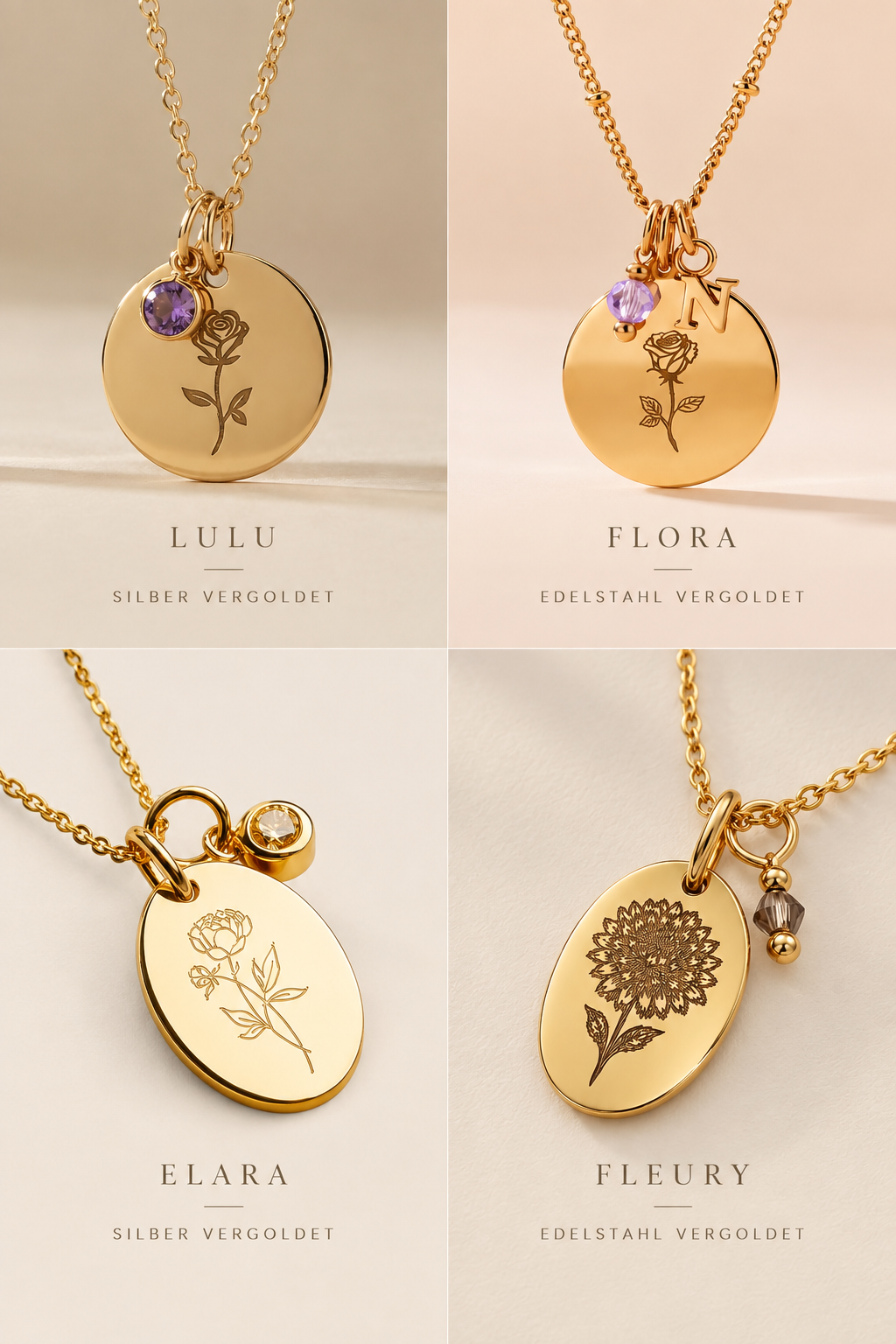
Pendants give a layered look its story. A necklace with a letter can express closeness, a locket can preserve memories, and a moon or star can symbolize courage and guidance. This is exactly why it looks particularly beautiful when you let only one pendant play the leading role.
If you are wearing a more striking necklace with a coin, protective symbol, or engraved detail, combine it with calmer chains. A fine ball chain, a delicate link chain, or a simple piece of jewelry without a pendant will give it room. Multiple large symbols next to each other can quickly look cluttered—unless that exact expressive, playful style is your intention.
Your layering becomes very personal when you select jewelry based on life moments. An initial necklace can become a reminder of friendship, a birthstone a small token for your family, and a symbol pendant a daily companion through a new phase of life. This way, you aren't just wearing trends, but pieces that are meant to stay with you.
Combining materials and colors harmoniously
Silver, gold, and rose gold no longer need to be kept strictly separate today. A conscious mix of materials can look modern, soft, and very individual. To ensure it looks high-quality, a connecting element helps: for example, similar chain structures, recurring small pearls, or pendants in a related design language.
925 Sterling silver gives your layering a clear, timeless radiance. Gold-plated silver brings warmth to the complexion and looks especially beautiful with cream, brown, black, or bold colors. If you combine both tones, it is best to start with two necklaces and observe the overall impression. A small golden detail on a silver base is often enough to create intrigue.
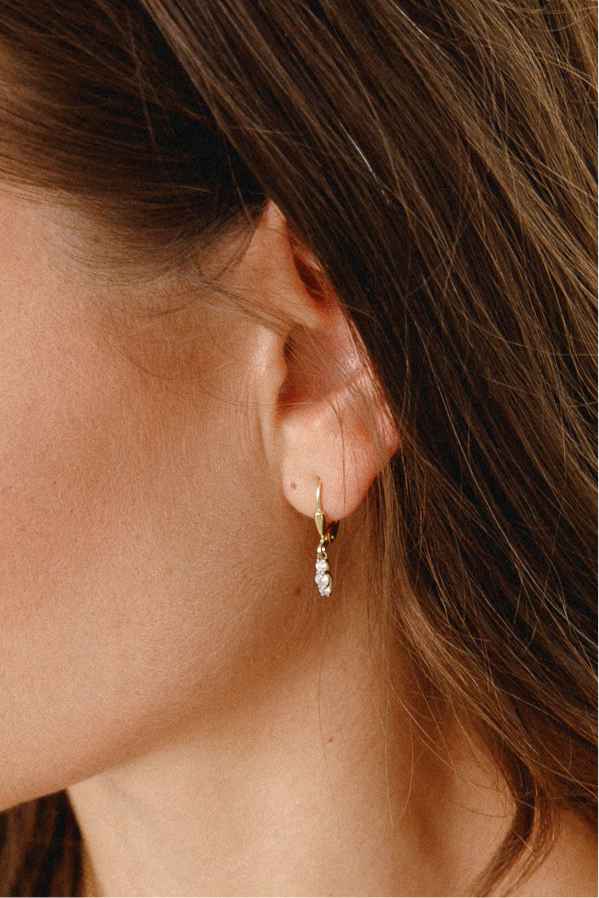
Pearls and zirconia can also be part of your everyday layering. A single freshwater pearl instantly makes fine link chains look softer, while a small zirconia accent captures light without becoming too dominant. When using several sparkling pendants, restraint is required: one highlight usually has more impact than many.
Finding the right balance for your personal style
Layering can be minimalist, romantic, or expressive. If you love clean looks, combine two narrow necklaces of similar lengths with one small pendant. For a feminine, playful style, fine links, pearls, and symbolic details go together wonderfully. If you like using jewelry as a statement, feel free to start with a bolder necklace and accompany it with two very delicate layers.
Your daily life also dictates your selection. In the office or at appointments, a reduced layering style with two necklaces often feels comfortable and polished. For a dinner, wedding, or special evening, you can add an additional pendant. The important thing is that you do not feel "costumed." Jewelry looks most beautiful when it accompanies your attitude—not when it covers it up.
A good test is looking in the mirror from a little distance. Do you see a clear order from short to long? Does one piece visibly take the lead role? And do you still feel entirely like yourself? If so, your combination is harmonious.
How to keep fine necklaces beautiful and less tangled
Fine pieces of jewelry deserve a little attention, especially when you combine them frequently. After wearing them, store necklaces individually and as straight as possible, rather than putting them all together in a jewelry box. A jewelry case with separate compartments or small hooks helps avoid knots and protects delicate pendants.
Before exercising, showering, swimming, and applying perfume or lotions, you should take off your necklaces. This preserves the shine of silver, gold plating, pearls, and zirconia. If a necklace does happen to twist, undo the knot with patience and without pulling—preferably on a smooth surface and with clean, dry hands.
Your most beautiful layering does not have to follow fixed rules. Choose the necklace today that feels like you, and give it companions that continue its story quietly.