Selecting a birth flower pendant made easy
A piece of jewelry becomes truly unforgettable when it quietly tells a story about the person wearing it. Choosing a birth flower pendant therefore means much more than simply picking a pretty blossom. It is about the month of birth, a personal message, and a design that feels right every single day.
Whether for yourself, your sister, a best friend, or to celebrate the birth of a child: a floral pendant can commemorate a beginning, express closeness, and preserve a feeling. Precisely because flowers have their own language, it is worth taking a closer look at both symbolism and style.
What your birth flower can tell
Birth flowers are traditionally assigned to individual months. Their meanings are not identical in every country—some associations differ depending on cultural tradition. This doesn’t make the choice more complicated, but rather more personal: in the end, the most beautiful meaning is the one in which you recognize yourself or the recipient.
January is often associated with the carnation. It stands for deep affection, loyalty, and a strong, warm character. February belongs to the violet, a delicate blossom with a message of modesty, connection, and quiet strength. The March daffodil embodies new beginnings, hope, and the light after winter.
For April, the daisy is a lovely choice. It stands for innocence, joy, and an uncomplicated outlook on life. May’s lily of the valley is associated with happiness, new beginnings, and warmth. Those born in June find a symbol of love, beauty, and deep emotion in the rose—classic, yet never ordinary.
In July, the larkspur is often chosen, expressing lightness, openness, and a radiant aura. August belongs to the gladiolus, a sign of strength of character, sincerity, and courage. For September, the aster represents patience, wisdom, and trust.
The marigold in October brings warmth, creativity, and confidence. November’s chrysanthemum is widely associated with friendship, happiness, and a special inner depth. To end the year, the narcissus, and sometimes the holly, stand for those born in December—as a sign of hope, protection, and the promise of a new beginning.
These associations are a beautiful guide. But perhaps you have a personal memory of your grandmother’s garden, a summer vacation, or a loved one linked to a different flower. That, too, can be the right birth flower.
Choosing a birth flower pendant: meaning first
Before you look at chain length, precious metal, or details, take a moment to think about the person. Are they romantic and playful, clear and minimalist, or perhaps bold in their style? A pendant should reflect their personality rather than just representing their birth month.
For a gift celebrating a birth, the child’s flower is a particularly lovely idea. It captures the first major milestone without appearing too childish. Later, the necklace becomes a small keepsake that grows with them. For moms, a pendant with the child’s birth flower can be an equally intimate choice—especially when combined with initials, a name, or a date.
With a friend, the symbolism can be interpreted a little more freely. Perhaps the violet represents your close bond or the aster a friendship that endures even through turbulent times. For yourself, the flower can become a sign: of a new beginning, your roots, or the strength that you don't always need to show out loud.
The right design for your everyday life
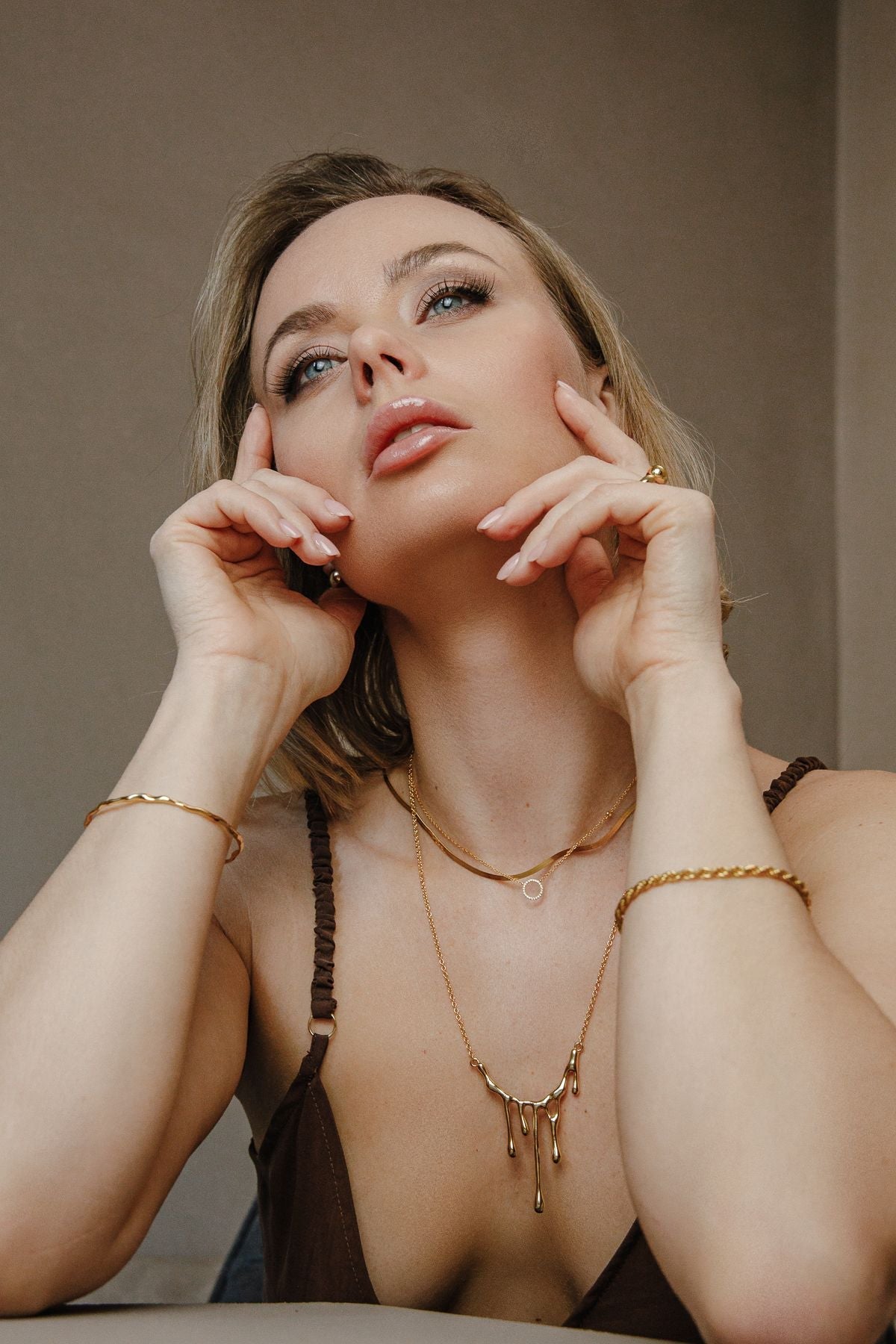
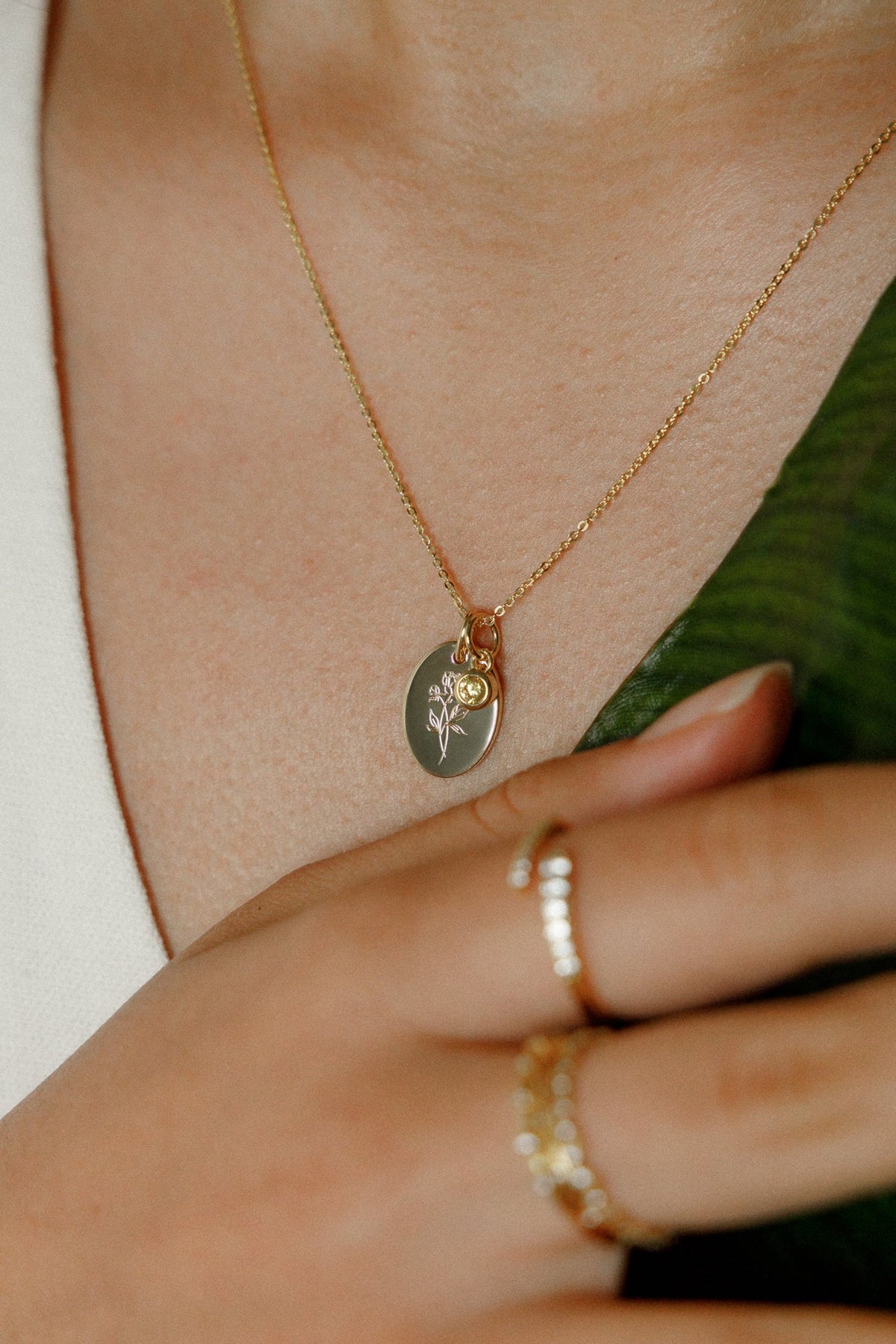
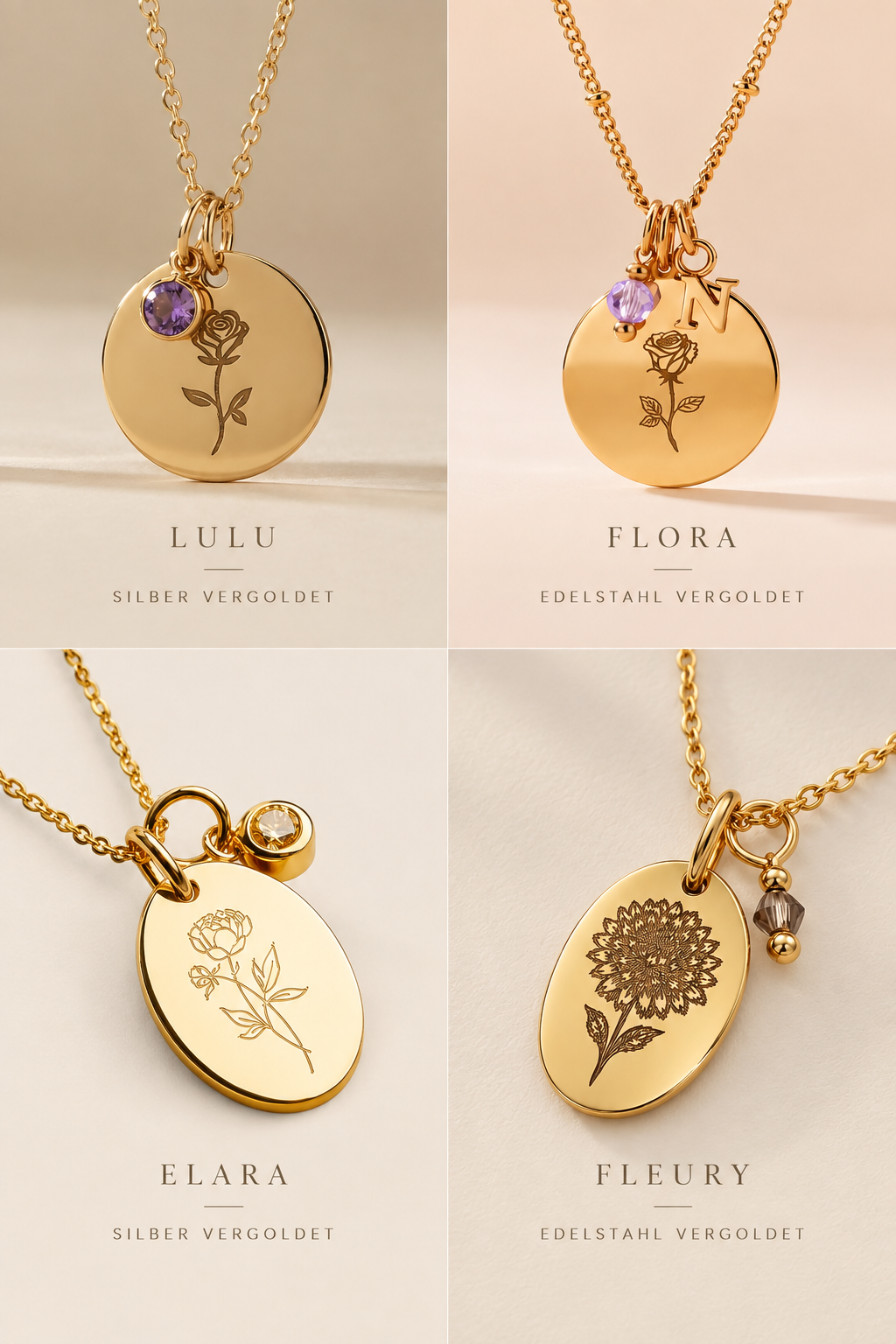
A delicate pendant with a finely engraved flower looks understated and elegant. It pairs well with a simple silver chain, an open shirt collar, and other layered necklaces. Those who love jewelry with clean lines will wear this minimalist design often and in many different ways.
A sculptural flower or a pendant with small cubic zirconia accents adds more points of light. Such designs are ideal if you want the jewelry to be consciously visible—with a dress for a celebration, as a delicate statement in everyday life, or as a gift that brings joy the moment the box is opened.
Size also changes the effect. Small pendants feel intimate and personal, almost like a secret on the skin. A slightly larger flower pendant shows the symbolism more clearly and can become the focal point of a layered look. If the necklace is to be worn daily, a lightweight, not-too-extravagant design is often the best decision.
When it comes to chain length, personal style counts. A short chain sits close to the collarbone and elegantly showcases the pendant. Medium lengths feel relaxed and can be wonderfully combined with other necklaces. Those who like higher necklines or knitwear often opt for a longer version so that the flower remains visible.
Silver, gold-plated silver, or real gold?
The material defines not only the look but also the feeling that a piece of jewelry conveys. 925 sterling silver has a clear, timeless radiance and pairs beautifully with cool colors, minimalist looks, and modern combinations. It is a wonderful choice for a pendant that is meant to be worn daily and styled in new ways.
Gold-plated silver gives the birth flower warmth and a soft, sun-kissed glow. It harmonizes with cream, beige, brown, and warm skin tones, but looks just as beautiful with black or white. As a gift, gold often feels particularly festive without the design losing its lightness.
Real gold in 333 or 585 is a choice for jewelry intended to be a lifelong companion. It is particularly suitable for major life moments such as a birth, a christening, or a milestone birthday. Keep in mind: not every meaningful gift must be made of solid gold. What matters is that the material, design, and occasion suit your budget and the person.
If the pendant is worn frequently, it also deserves care. Silver can darken over time, but it can be gently polished back to life. Gold-plated pieces stay beautiful longest if they are removed during sports, showering, sleeping, or when coming into contact with perfume and lotions. That way, the shine remains a part of the memory.
Personal details that turn jewelry into a keepsake
A birth flower is already a very personal gesture. An engraving makes it even more intimate. An initial on the back preserves the symbolism discreetly, while a birth date makes the occasion visible. For moms, combining several flower pendants can also be wonderful—one blossom for each child, added over the years.
The look can certainly grow in an imperfect way. A single birth flower looks pure and sophisticated. Two or three pendants, on the other hand, tell stories of relationships, family, and different chapters in life. The only important thing is that the necklace does not look overloaded: small, coordinated shapes and similar metal colors create a harmonious overall picture.
If you are choosing a gift, also think about the moment of giving. A few handwritten lines about the symbolism of the flower turn a beautiful necklace into something very personal. You aren't just giving jewelry, but the memory of what you see in that person.
When a birth flower is the perfect gift idea
A flower pendant suits many occasions, precisely because it can be interpreted so individually. For a birthday, it honors the person and their own unique story. For a birth or christening, it can be a silent companion for the child or a loving gift for the mother. For Mother’s Day, an anniversary, or as a friendship gift, it shows thoughtfulness without needing many words.
A birth flower can also be just right after a major life change: after moving, graduating, before a trip, or as a reminder of a new beginning. The blossom then becomes associated not just with a month, but with a feeling. And that is exactly where its special power lies.
Therefore, don't just choose the flower that is on the calendar page. Choose the one whose meaning triggers a little glow—because the most beautiful pendant is the one that makes every wear feel a little like coming home.