Choosing Everyday Jewelry for Sensitive Skin
A ring you never want to take off. A necklace with a symbol that reminds you of a loved one. Or small hoop earrings that subtly complete any outfit. Everyday jewelry for sensitive skin should be all of these things: personal, beautiful, and so comfortable that it accompanies you through the day without irritating your skin. The design alone is not the only decisive factor. The material, the craftsmanship, and a mindful approach to your jewelry make all the difference.
Everyday jewelry for sensitive skin starts with the material
Sensitive skin doesn't always react the same way. Some people feel a slight itch after a few hours, others experience redness or dry patches – especially on earlobes, the neck, fingers, or under a tight bracelet. Often, there isn't a fundamental intolerance to jewelry behind it, but rather a reaction to certain metals, coatings, cosmetic residues, or moisture.
For jewelry that stays close to you every day, high-quality and transparently named materials are a good foundation. 925 sterling silver consists of 92.5 percent silver and has established itself as a timeless companion. It feels elegant, suits both delicate and expressive designs, and combines wonderfully with symbols, engravings, pearls, or sparkling stones. As with any metal, individual tolerance can vary. If you are prone to allergies, it is therefore worthwhile to first test a single piece of jewelry at your leisure.
Gold-plated 925 sterling silver can also be a beautiful choice if you love the warm shimmer of gold. Here, careful gilding and your care habits are particularly important. The gold layer is a precious part of the design, but in everyday life, it is exposed to greater wear and tear than solid gold. Those who remove jewelry during sports, showering, or sleeping usually preserve its shine longer.
Real jewelry made of 585 or 333 gold is a special everyday companion for many. It combines a valuable appearance with durability and can become a meaningful gift for a lasting life moment. Nevertheless, it is true: gold alloys also contain various metals. For very sensitive skin or a previously diagnosed contact allergy, individual dermatological advice is the safest decision.
Triggers that are often overlooked
If a beloved piece of jewelry suddenly feels uncomfortable, the material is not necessarily to blame. Especially in everyday life, jewelry and skin encounter many things that can promote irritation: perfume on the neck, hand cream under a ring, hairspray on earrings, or sweat under a necklace. Even small scratches and deposits can make a surface feel less comfortable.
Pay particular attention to these four situations:
- You wear jewelry directly after applying cream or perfume.
- You leave rings, necklaces, or earrings on during sports, swimming, or showering.
- Your jewelry is put uncleaned into a box after wearing, even though moisture or cosmetics have collected on it.
- You rarely switch between pieces of jewelry, even though an irritated spot actually needs a small break.
This doesn't mean you should only wear your favorite jewelry on special occasions. It's more about giving it and your skin good conditions. Put on jewelry only after care products have been absorbed. Remove it before water, sauna, and exercise. And if your skin appears irritated, a delicate bracelet can give way to a necklace or hair accessory the next day. Personal style can change - just like your everyday life.
How to find jewelry that truly feels like you
For sensitive skin, the best choice is not automatically the simplest piece of jewelry. A pendant with your initial, a protective symbol, a birthstone, or a ring as a reminder of a new beginning can suit you just as well as a minimalist hoop. The important thing is that the shape and wearing comfort fit your routine.
For everyday: light, smooth, and consciously chosen
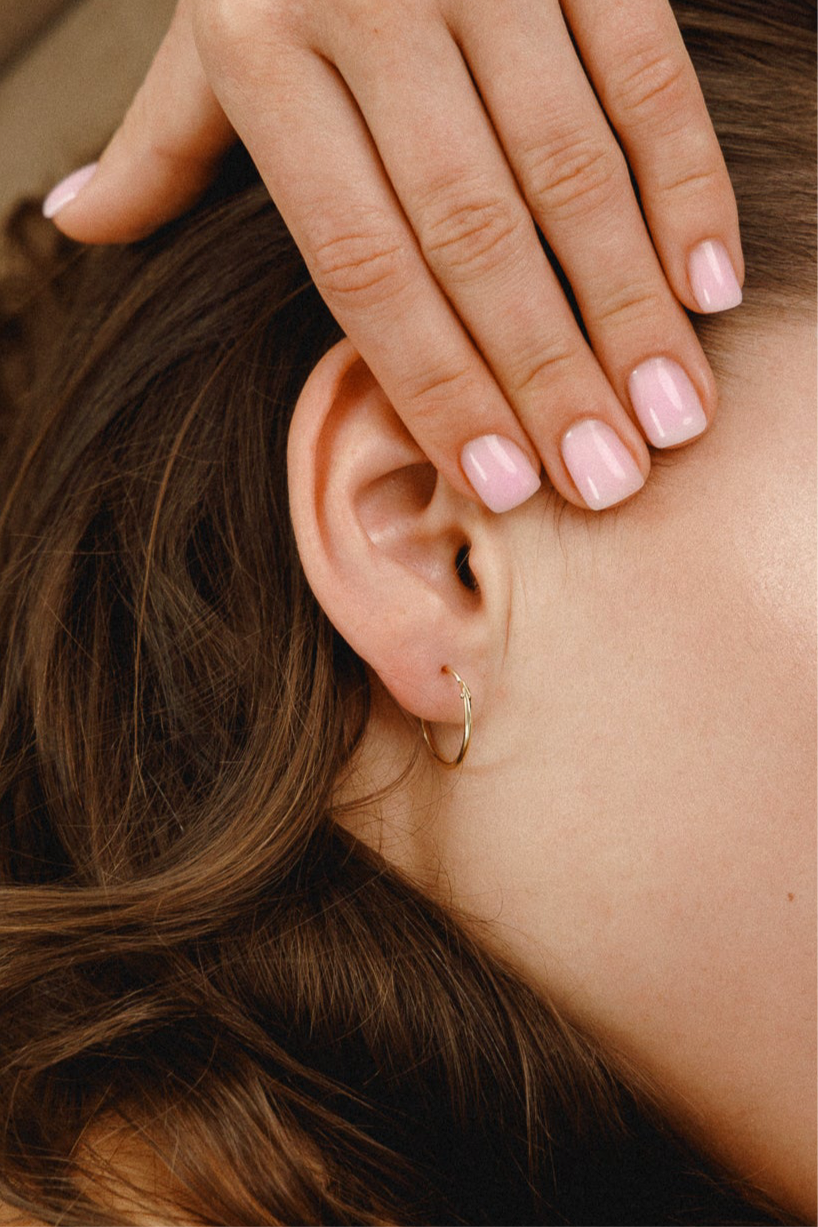
Delicate chains and small stud earrings are often comfortable because they put little weight on the skin and don't constantly get caught on clothing. For earrings, pay attention to cleanly crafted posts and clasps. For piercings, special care is worthwhile: since they sit directly in a sensitive area, you should take material specifications seriously and seek professional advice for new or irritated piercing sites.
Rings can carry a lot emotionally – an engraving, a sign of connection, a silent reminder of your own strength. At the same time, hands are often exposed to water, soap, and disinfectant. If your skin between your fingers tends to be dry, it makes sense to remove rings occasionally and only put them back on after washing your hands when the skin is completely dry.
For necklaces, the length also determines comfort. A short necklace lies closer to the skin and comes into contact with perfume or sweat more easily. A slightly longer necklace can feel freer, especially under blouses, knitwear, or open collars. Experiment to see which length suits your style and your daily movements. Jewelry should not be a distraction, but a familiar detail.
Gold-plated or real gold? A question of your everyday life
Gold-plated silver jewelry is ideal if you love different looks and want to add warm accents to your jewelry box. It offers you the opportunity to combine delicate layering chains, small statements, and symbolic pendants in many ways. Its beauty is particularly long-lasting if it is not constantly exposed to water, lotions, and friction.
Real gold, on the other hand, is a beautiful choice for pieces that you see as lasting companions: for example, a ring for a birth, a wedding gift, or a necklace that reminds you of your roots. The higher price is part of a different decision. You are not only investing in a material, but in a piece of jewelry that can experience many chapters with you. Which variant is better, therefore, depends not only on your skin but also on how and how often you want to wear the piece.
Care that respects your jewelry and your skin
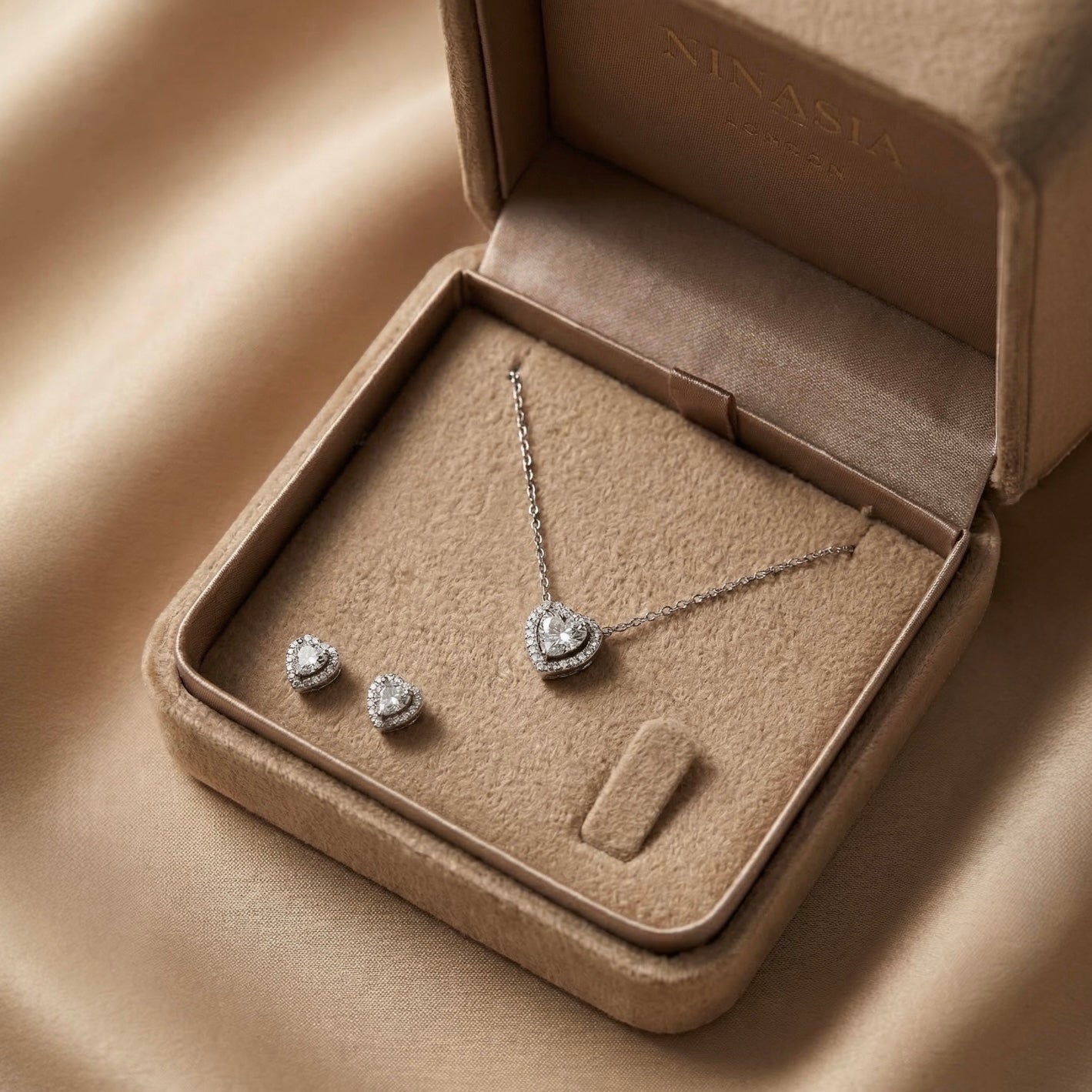
Good care doesn't have to be complicated. After wearing, it is usually enough to gently wipe the jewelry with a soft, dry cloth. This removes residues before they set. Store individual pieces separately so that they don't rub against each other or get tangled. A jewelry box or a soft pouch protects delicate surfaces and turns your collection into a small, organized moment for yourself.
Sterling silver can oxidize and darken over time. This is not a defect in quality, but a natural reaction of the material. The shine can often be restored with a suitable silver cleaning cloth. For gold-plated pieces, restraint is required: friction and aggressive cleaning agents can attack the gilding. A soft cloth and dry, protected storage are usually the better choice here.
Avoid home remedies whose effects you cannot assess. Toothpaste, coarse brushes, or strong rubbing can damage delicate surfaces, stone settings, and gilding. If a piece of jewelry has sentimental value or is heavily soiled, professional cleaning is often the more loving solution.
If the skin already reacts
Redness, burning, persistent itching, swelling, or weeping areas are a clear signal to remove jewelry immediately. Gently clean the affected skin and give it time to recover. Do not wear the same piece again as long as the area is irritated. In case of severe, recurring, or unclear symptoms, medical advice should be sought - especially if you suspect a contact allergy.
It can be helpful to recognize a small pattern: Do you react only to certain earrings, only in warmth, or only when you also wear perfume? This way, you can gradually find out which materials and routines are good for you. This attention is not a renunciation of style. It is a form of self-care.
Jewelry with meaning should feel like a familiar touch - not like something you have to endure. Choose pieces whose material and history suit you, treat them with gentle attention, and allow your skin to lead the way. Then a beautiful detail will become a companion that subtly makes your personality visible every day.